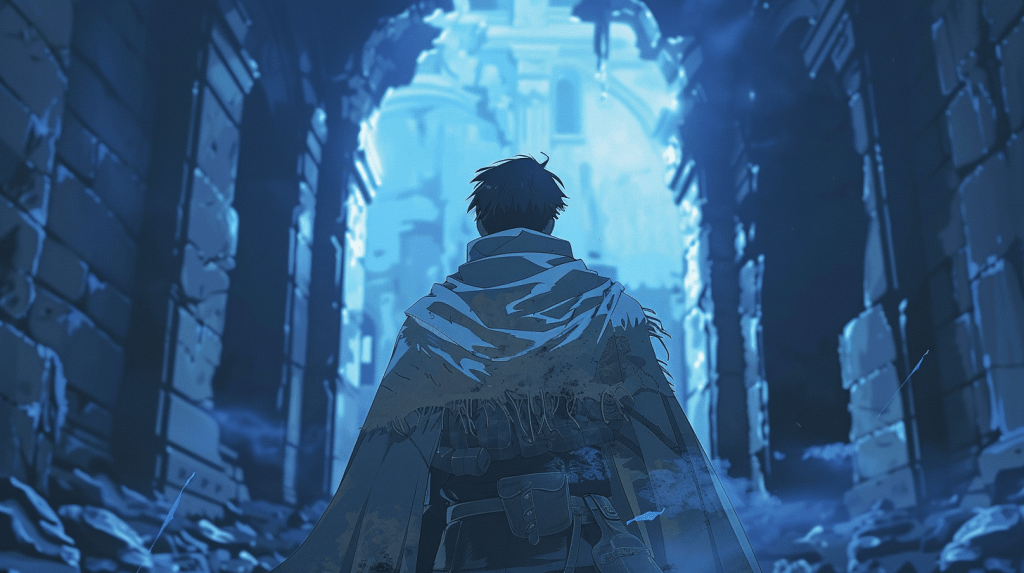
Introduction to Solo Leveling.
Let me introduce you to Solo Leveling. This anime is set in a world where mysterious gates open to dungeons filled with monsters, and special humans called hunters are the only ones who can clear them. Among these hunters is Sung Jin-Woo. He’s not powerful, not famous—just a weak E-rank hunter doing what he can to survive.
He enters dungeons not out of ambition but out of necessity. He needs the money to pay for his mother’s medical bills and to help his sister through college. From the start, he’s seen as a burden by his peers, just being invited when an extra person was needed to carry luggage. He struggles against even the weakest creatures and constantly has to rely on others to get out alive. He’s overlooked, disrespected, and stuck in a loop of barely getting by.
But that’s what makes his story so captivating. It doesn’t start with power. It starts with burden. With responsibility. With the kind of quiet desperation that many people carry but few ever talk about. And when his life takes a turn and he discovers a system that allows him to grow stronger, it becomes more than just a fantasy. It becomes a blueprint for transformation.
The Psychology of Solo leveling.
Early on in the story, something unexpected happens to Jin-Woo. After barely surviving a brutal dungeon, he wakes up in a hospital and realizes that something is different. He’s been given access to something no one else can see. He calls it “the system”.
The System is like a personal computer interface that appears in his field of vision. It speaks to him, guides him, and pushes him. But this isn’t some magic wand that makes him strong overnight. It’s more like a personal coach that doesn’t care how tired or broken he is. It gives him quests. Daily physical challenges like 100 push-ups, 100 sit-ups, 100 squats, and a 10-kilometer run. If he skips them, he’s punished.
No excuses, no negotiations.
But when he completes them, he gets rewards. Not just in-game currency or new gear but real strength, measurable increases in speed, power, stamina, and intelligence. The System lets him level up his attributes like a character in an RPG, but it only works if he does the work. Nothing is handed to him.
This is where the psychology of the show starts to unfold. Because the System isn’t a cheat code. It’s a mirror. It reflects how far he’s willing to go. It rewards effort, consistency, and pain. It punishes laziness and comfort. And in that way, it becomes the perfect metaphor for real life. Most people wait for life to hand them an opportunity, but Jin-Woo is forced to earn his way up, one push-up at a time.
The beauty of the System is that it believes in him more than anyone else ever did. Even when the world wrote him off as weak and useless, this invisible framework gave him a path forward. All he had to do was choose to walk it. And that choice, to commit to the grind, even when no one else is watching, is what turns him into something more.
It’s not about the monsters. It’s not even about the power. It’s about the mental shift that happens when you stop blaming the world and start building yourself. The System just gives him a reason to believe that showing up matters. The rest is on him.
The “System” in real life.
I believe the system exists in real life too. But unlike in Solo Leveling, it’s not here to help you. It doesn’t care if you complete your daily tasks. It doesn’t remind you to stay on track. It doesn’t punish you for skipping a workout or reward you when you do the right thing. In the real world, the system is quiet. It watches, but it doesn’t step in.
You can drift. You can avoid responsibility. You can lie to yourself and say you’ll do it tomorrow. Nothing will stop you. Nothing will chase you. And that’s the trap.
Because in the anime, the system forced Jin-Woo to grow. It gave him rules. It gave him a path. In real life, that structure is something you have to build for yourself. No one’s coming to do it for you.
But I still believe we can create our own system. We can build something personal. Something that keeps us accountable. A way to measure our growth, even if no one else sees it.
That might look like setting your own daily quests. Creating small habits and showing up no matter how you feel. Keeping promises to yourself even when there’s no reward on the other side.
It won’t be perfect. Life is unpredictable. But if you build it with intention, your system becomes the foundation. It becomes something you can lean on when motivation fades or when things get hard.
That’s what Solo Leveling reminded me. The world may not reward your effort, but that doesn’t mean effort is worthless. You can still rise. You can still evolve. But only if you choose to become the person who doesn’t need permission to grow.
The Takeaway.
If you’re someone who enjoys anime, chances are you’ve already seen Solo Leveling. And if you haven’t, I genuinely encourage you to watch it, but not just for the action or the animation. Watch it with a different lens. Watch it while thinking about the ideas we’ve talked about here.
This isn’t just a story about a guy getting stronger. It’s a story about what it means to rise when no one expects you to. It’s about building discipline in silence. About showing up even when the world isn’t watching. About becoming the kind of person who doesn’t wait to be saved.
The System in the anime might be fiction, but the mindset it builds is very real. You can build your own version of it. You can set your own quests, create your own structure, and take responsibility for your growth. No one will reward you with a sword or a new skill. But over time, the real rewards show up. Clarity. Confidence. Momentum. A deeper sense of who you are and what you’re capable of.
Solo Leveling reminds us that no matter how ordinary your starting point is, you can create something powerful if you’re willing to take the first step and then take it again, and again, until the path becomes yours.
In the end, it’s not about waiting for a system to save you. It’s about becoming the one who builds it.
So if you do decide to watch the anime, keep this in mind. Look past the shadows and the monsters. Pay attention to the growth. To the choices. To the mindset. You might find more of yourself in Sung Jin-Woo than you think, I know I did.
 Sadiel Almanza's Blog
Share your thoughts..